How to Start a Daily Poetry Journal: A 15-Minute Beginner Guide
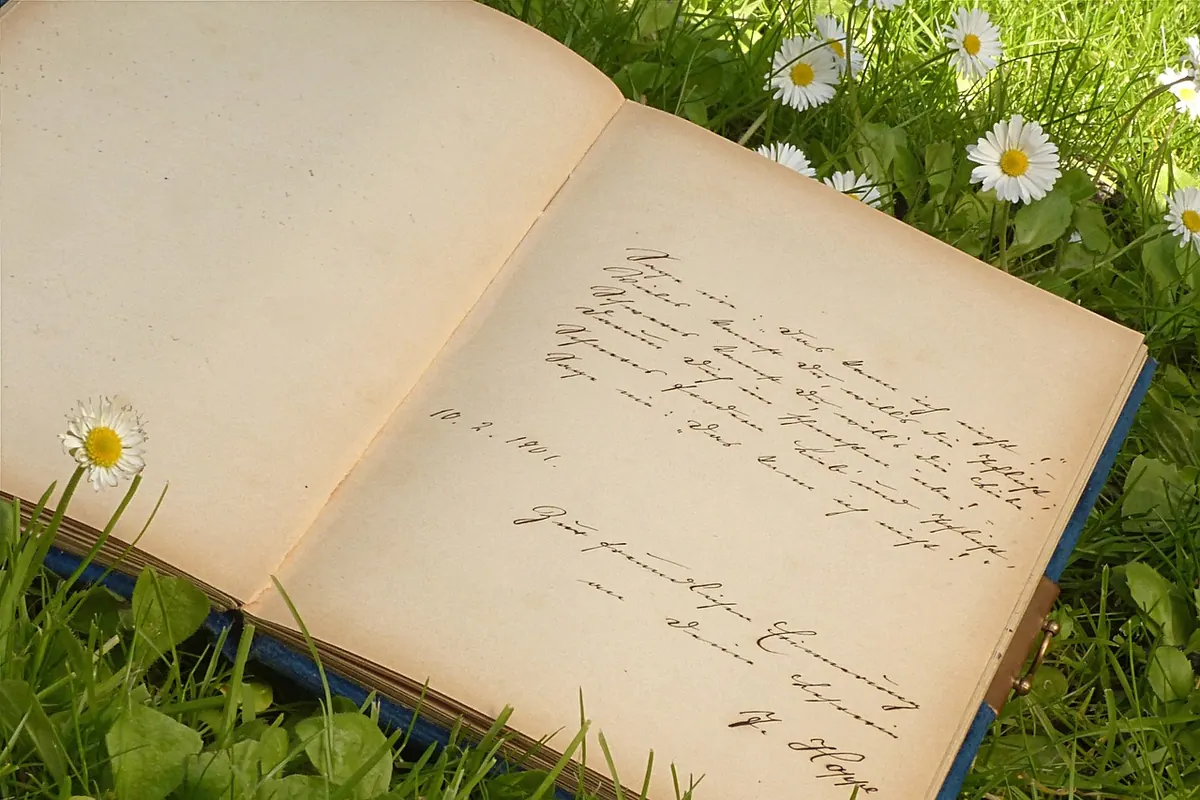
Some poems arrive whole. Most do not. They begin as a phrase overheard at a bus stop, a colour that doesn't have a name yet, the particular silence of a house after everyone has left it. A daily poetry journal is where those fragments go before they have a chance to dissolve. One notebook, fifteen minutes, no obligation to finish anything — that is the entire method. What follows is a routine you can run tonight, and again tomorrow.
It is not a diary. Diaries record what happened; a poetry journal records what language did. The distinction matters, because it changes what you write down. "Bad day at work" belongs in a diary. "The photocopier kept sighing like a bored congregation" belongs here.
It is not a manuscript either, and this is where most beginners trip. The moment you start judging pages as drafts of finished poems, the notebook stops being useful. Think of it as a holding pen. Fragments go in loose, stay a while, and a few eventually get taken out and worked on properly. The rest are allowed to stay exactly as they are.
Three habits keep the thing functional: date every page, keep each session to a single page, and write in pen. Dates let you see patterns later. One page stops the session from sprawling. Pen removes the option of quiet erasing, which is really just self-editing arriving too early.
Fifteen minutes sounds too short to matter. It isn't, provided the time is shaped rather than simply spent. Give the session a beginning, a middle and a small push at the end.
Notice what the routine never asks you to do: produce a poem. That is the point. The pressure to finish is what kills these notebooks in the second week.
Some days the room offers nothing. On those days, borrow a constraint. Constraints do the searching for you.
If you adopt one craft rule for the whole notebook, make it this: replace every general noun with a specific one. Not "a bird" but "a magpie." Not "a car" but "a hatchback with one headlight." Not "dinner" but "lentils, burnt at the bottom." Specificity is what turns a note into something a stranger can see. It is also the fastest cure for writing that sounds like everyone else's.
There is a strong pull, once a line starts working, to carry it through to an ending. Resist it for the first month. A notebook full of half-finished pieces is far more valuable than a notebook with three laboured ones, because each unfinished page is still alive — it can be returned to, twisted, contradicted.
Raw note: "light moving on the wall."
Pushed three lines later: "The light has been walking the wall since six, / patient as a man who has lost his keys, / checking the same pocket twice."
That small push took ninety seconds. Nothing was resolved, and nothing needed to be. The line will keep until you have a use for it.
Habit beats inspiration here, and habit is mostly logistics. Attach the fifteen minutes to something that already happens without fail — the first coffee, the last ten minutes before sleep, the wait for the pasta water. Same chair, same table, same notebook if you can manage it.
Keep the notebook small enough to carry and cheap enough to ruin. A fat, expensive, cloth-bound book invites reverence, and reverence is paralysing. A five-euro exercise book that you can spill tea on is a better instrument.
On the days you miss — and you will miss days — do not restart with a flourish. Write three lines and close the book. Three lines counts. The chain matters more than the length of any single link.
Once a month, read the whole notebook with a pen in a different colour. Mark anything that still gives a small jolt: a phrase, an image, a rhythm. Copy those marks into a single page at the back called "keep." Nothing else — no rewriting, no polishing.
That keep page becomes the raw material for real work later. After two or three months, you will have more starting points than you can use, which is a far better problem than a blank page.
Set the timer for fifteen minutes. Date the page. Write one line about where you are sitting, then five plain observations, then three more lines after whichever one you like best. Close the notebook and leave your question for tomorrow at the bottom.
Do that for a week before deciding whether it works. The first sessions will feel thin, and that is normal — the notebook is not there to impress you on day one. It is there so that the line you overhear on Thursday has somewhere to land.
Photo: Oldiefan / Pixabay