Free Verse vs. Fixed Form: How to Choose the Right Structure for a Poem
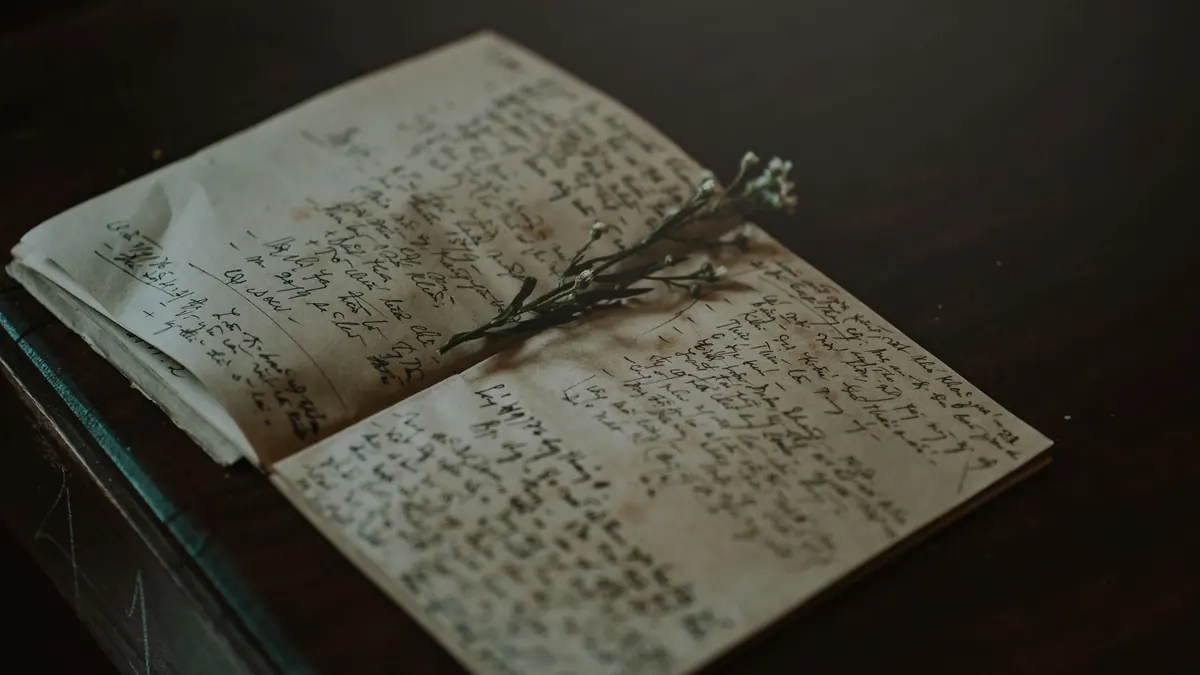
Most poets don't choose a structure so much as default to one. Free verse arrives first because it feels forgiving: no rhyme scheme to satisfy, no syllable count to check. Then, three drafts in, the poem goes slack and you wonder whether a sonnet would have kept it honest. The reverse happens too. You start counting stresses, the lines begin to sound like a greeting card, and the poem you actually wanted to write is buried under the machinery.
Choosing between free verse and fixed form isn't a loyalty test. It's a craft decision, closer to picking a lens than picking a side. The question isn't which one is better. It's which one makes this poem do the thing you want it to do.
A fixed form comes with decisions already made. The sonnet gives you fourteen lines and a turn; the villanelle gives you two refrains and a pair of rhymes that won't leave; the sestina gives you six end-words recycling in a set order; the ghazal gives you couplets, a refrain and a signature. Even blank verse, unrhymed but metered, hands you a pulse to speak against. You spend less energy inventing shape and more energy filling it.
Free verse hands you nothing. That's the promise and the trap. Without an inherited pattern, rhythm has to be built from materials you supply: line breaks, syntax, repetition, white space, the length of a breath. A free verse poem isn't unstructured; it's structured on purpose, locally, in ways a reader should be able to feel even when they can't name them.
This is why bad free verse and bad formal verse fail differently. Sloppy free verse fails by drift: the lines could be rearranged without loss, which means they were never doing work. Sloppy formal verse fails by force: the rhyme arrives because the rhyme had to arrive, and the sentence bends to meet it. Learn to recognise both failures in your own drafts, because they tell you which way to lean next.
Subject is the first and most reliable signal. Ask what your poem is doing: arguing, remembering, circling, confessing, cataloguing, mourning? Each of those motions has forms that fit it.
Be honest about feasibility. A villanelle draft collapsed on me once because the two refrains the subject demanded rhymed with nothing useful, and the poem needed three false lines to keep the pattern alive. The subject hadn't asked for a villanelle. It had asked for repetition. A looser refrain, in free verse, would have done the work in half the space.
Fixed form is ceremonial. It signals that the poem has been made, considered, weighed. That suits wit, praise, mockery, formal grief, anything with a public occasion behind it. It also creates useful friction: strict meter describing something chaotic can be devastating, because the calm surface contradicts the content.
Free verse is conversational by default. It can whisper, interrupt, trail off, change its mind mid-line. If the poem needs to sound like someone thinking aloud at two in the morning, forcing it into rhymed quatrains usually flattens the urgency.
A quick test: read the draft aloud and listen for the moment you'd be embarrassed to say those lines to a friend across a table. If the language is straining to reach the rhyme, cut the rhyme. If the language is flat and shapeless, borrow a constraint, even a small one, such as a set number of stresses per line or a repeated phrase, and watch what it forces you to notice.
Structure lives at the level of the line, not the stanza. Take one sentence and break it three ways.
She left the porch light on for a year after he died.
Now the same sentence, divided:
She left the porch light on / for a year / after he died.
The third break delays the reveal; "after he died" lands with weight because the line made us wait. The information is identical. The poem is not.
That's the whole argument for free verse, and also its difficulty: you are responsible for every break. In metered verse the line has a predetermined length, so the decisions concern which syllable to stress, where to place the caesura, whether to enjamb. In free verse the line's length is itself an expressive choice, and readers register inconsistency even when they can't explain it. If the lines run eight syllables, then fourteen, then three, then eleven with no evident reason, the ear hears noise.
Practical move: mark every line break in your draft and ask what it does. Does it create suspense, redirect the syntax, isolate a word? If the answer is "nothing," you have found the flab.
Most of the time you'll learn something specific: the refrains will show you which words the poem actually cares about, or the meter will expose a sentence that was only pretending to be a line. Even a failed formal draft is useful information.
Plenty of good poems live between the two camps. Blank verse keeps the meter and drops the rhyme. A free verse poem can carry a repeated line every four stanzas and function, in practice, as a refrain form. Prose poems borrow the paragraph and keep the compression. You can write a sonnet-shaped poem in loose pentameter with a single rhyme at the close and simply call it what it is.
Constraints aren't membership cards. Take one, leave the rest. The only rule worth keeping is that the structure should be doing something the sentences cannot do alone.
Three questions, in order. What is this poem's motion? What tone can it carry without strain? Where do the lines want to break? Answer those and the choice mostly makes itself.
Then trust the draft over the theory. A poem that needs a form will tell you by refusing to work without one; a poem that doesn't will start sounding borrowed. Write the version that lets you say the true thing, and let the label arrive later, if it arrives at all.
Photo: Min An / Pexels
Previous Post
Common Mistakes in First-Person Narration and How to Fix Them
Next Post
A Beginner’s Guide to Writing a 500-Word Flash Fiction Story